<?xml version="1.0" encoding="utf-8"?><feed xmlns="http://www.w3.org/2005/Atom" ><generator uri="https://jekyllrb.com/" version="3.10.0">Jekyll</generator><link href="https://learn-teochew.github.io/feed.xml" rel="self" type="application/atom+xml" /><link href="https://learn-teochew.github.io/" rel="alternate" type="text/html" /><updated>2026-05-14T14:35:16+00:00</updated><id>https://learn-teochew.github.io/feed.xml</id><title type="html">Learn Teochew</title><subtitle>Study guide to Teochew language for heritage speakers. Teochew (潮州話), also known as Chaozhou, Chiu-chow, or Chaoshan, is a Chinese language in the Southern Min subfamily. This site helps to explain the grammar and usage of the language to heritage speakers who would like to improve their understanding of Teochew.
</subtitle><entry><title type="html">Don’t buy this Teochew textbook</title><link href="https://learn-teochew.github.io/2026/04/04/dont-buy-this-teochew-textbook.html" rel="alternate" type="text/html" title="Don’t buy this Teochew textbook" /><published>2026-04-04T00:00:00+00:00</published><updated>2026-04-04T00:00:00+00:00</updated><id>https://learn-teochew.github.io/2026/04/04/dont-buy-this-teochew-textbook</id><content type="html" xml:base="https://learn-teochew.github.io/2026/04/04/dont-buy-this-teochew-textbook.html"><![CDATA[<p>A friend recently shared a post about a new Teochew language textbook, but
before I could look into it more closely, she quickly followed up with
“actually, never mind”.</p>

<p>The book is titled “Learn Teochew Language: Conversational Teochew with
Dialogues for Beginners”, and is written by Robertson B. Kunz, who, according
to his website, is “an author and polyglot who enjoys learning foreign
languages. At the moment, he studies Spanish, German, Japanese, Mandarin
Chinese, Teochew, Korean, Arabic, Sanskrit, French and Italian.”</p>

<p>That’s a lot of languages! And apparently he feels confident enough to have
written and published textbooks for most of them too. That should be a huge red
flag, but I was curious about the Teochew textbook, since that is such a
rarity, I had to have a look.</p>

<p>The free preview on Amazon covered the acknowledgements, table of contents, and
introduction (all in English only), which I skimmed. The very first Teochew
words I encountered, though, were the following:</p>

<p>“… the Teochew word for ‘telephone’ is 電話 /tiⁿ⁷-ŭe⁸/ … ‘university’ is
大學 /tua⁷-ha̍k⁸/…”</p>

<p>I stopped reading there. The characters are right (and the same as in
Mandarin), but the pronunciation given for the first does not exist, while the
second is a mangling of two different pronunciations. For the record,
“telephone” is /tiɛŋ ue/ (written in IPA) or [diêng6 uê7] (Guangdong Pêng-im)
and “university̦” is either /tai hak/ (IPA), [dai6 hag8] (Pêng-im) following
vernacular pronunciation or /tua ɔʔ/ (IPA), [dua7 oh8] (Pêng-im) in literary
pronunciation. These are very common words, and all Teochew native speakers and
most heritage speakers should be able to tell you what the correct Teochew
readings are. The diacritics and what appear to be tone numbers are also
meaningless in any transcription or spelling system for Teochew that I know of.</p>

<p>Fellow diaspora Teochew @MăngUâgTeochew has already encountered this book and
written a <a href="https://medium.com/@hoi.manviet/buyer-beware-robertson-b-kunzs-learn-teochew-textbook-ee65938cbbcf">detailed
post</a>
on the many problems with this book. They see clear signs that it was hastily
put together with AI to make money from unsuspecting online shoppers, and the
same is likely true of Kunz’s other books. Much of the “Teochew” in the book is
inaccurate, actually Hokkien, or purely imaginary.</p>

<p>It is puzzling to me why Kunz would want to do something like this. He has a
YouTube channel and other social media accounts promoting his language learning
methods. In his book he thanks his mentors and a long list of people who have
helped or supported him. That’s a lot of people to disappoint, unless they too
were AI-generated.</p>

<p>And of all languages to pretend to be an expert on, why Teochew? If you try to
sell AI slop on a language like French or German, you will have many more
potential buyers, but there is enough high quality content out there that is
also free or inexpensive, you won’t need to dig around the back pages of Amazon
listings. With Teochew, there is a real lack of learning materials, but almost
everyone who wants to learn Teochew has some personal connection to the
language and will very quickly find out if the content is just made up. And
frankly there isn’t enough demand to make a living selling Teochew textbooks
(if there is please let me know so I can change jobs).</p>

<p>Dont’t waste your time or money on this book (I don’t want to drive further
traffic so I am not going to link to the book or its author’s website here). If
you are looking for a Teochew textbook in English, my recommendation is the
same as MăngUâgTeochew: <a href="https://www.lulu.com/shop/alvin-barbara-koons/spoken-swatow-book-one/paperback/product-1kmgvmny.html?srsltid=AfmBOoo3QglxtFcC6NtRoV5v45PoZS61fqxd7vNv04CwL-ihu9PMVe-V&amp;page=1&amp;pageSize=4">Spoken Swatow by Alvin and Barbara
Koons</a>,
originally published in the 1960s but now available as a print-on-demand title.
Get the WhatTCSay3 dictionary app for your mobile phone, join the Gaginang
Discord server to practice with other Teochew learners, and check out the
resources posted online by <a href="https://www.theteochewstore.org/">The Teochew
Store</a>.</p>]]></content><author><name></name></author><summary type="html"><![CDATA[A friend recently shared a post about a new Teochew language textbook, but before I could look into it more closely, she quickly followed up with “actually, never mind”.]]></summary></entry><entry><title type="html">Extract from the Sacred Edit of Kangxi in Swatow Vernacular</title><link href="https://learn-teochew.github.io/2024/02/23/sacred-edit-extract.html" rel="alternate" type="text/html" title="Extract from the Sacred Edit of Kangxi in Swatow Vernacular" /><published>2024-02-23T00:00:00+00:00</published><updated>2024-02-23T00:00:00+00:00</updated><id>https://learn-teochew.github.io/2024/02/23/sacred-edit-extract</id><content type="html" xml:base="https://learn-teochew.github.io/2024/02/23/sacred-edit-extract.html"><![CDATA[<p>Here is an interesting example of Teochew written with Chinese characters in
the 19th century, that I came across via <a href="https://twitter.com/justin_r_leung/status/1760499137596871167">this Twitter
thread</a>. Many
thanks to the participants @airin_lvr, Justin, Elijah, and Egas for a
stimulating exchange.</p>

<p>In the Introduction to the 1874 Chinese dictionary compiled by Samuel Wells
Williams, <em>Syllabic dictionary of the Chinese language arranged according to
the Wu-Fang Yuen Yin, with the pronunciation of the characters as heard in
Peking, Canton, Amoy, and Shanghai</em> (Shanghai: American Mission Press), there
is a side-by-side comparison of the same literary Chinese text translated into
different regional vernacular languages, including Swatow Teochew. These appear
to have been contributed by informants from different parts of China.</p>

<p>Williams’s aim was to show how different the literary “book style” is from the
vernaculars, and how different the regional vernaculars are from each other. As
he points out, “only in the … examples from Peking and Hankow, are all the
characters used in their proper signification.” I.e. regional vernaculars like
Teochew often use characters to write words that are not cognate to what those
characters represent in the literary language. They may be used because their
pronunciation is similar (phonetic gloss), or because they have a similar
meaning (semantic gloss). An example of a phonetic gloss is the spelling 做年
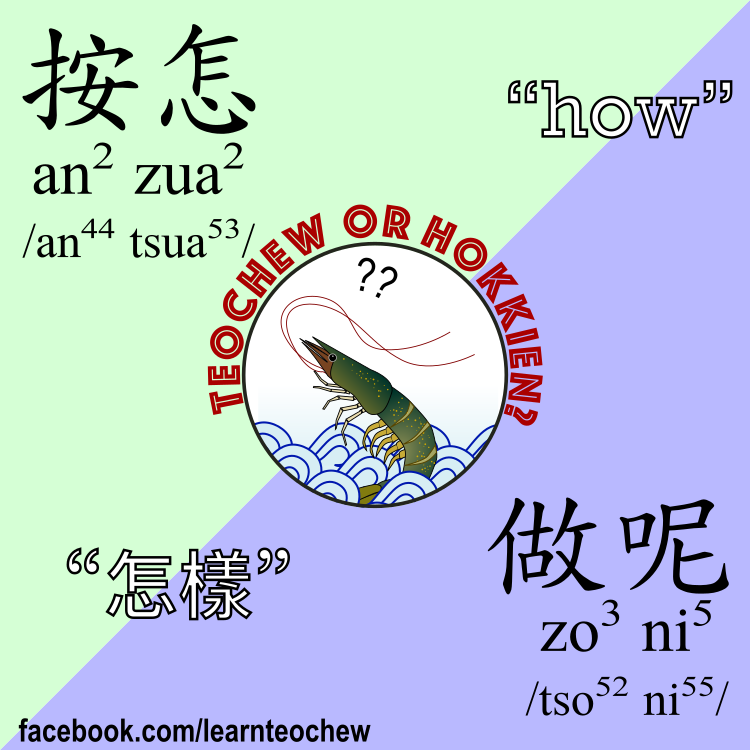
for Teochew zo3ni5 (“how”).</p>

<p>This text is a good example for vernacular character usages that were in use at
the time. For Teochew, the usages here are similar to those in late 19th/early
20th century Teochew songbooks (I’ve been keeping a
<a href="https://zh.wikisource.org/wiki/User:Kbseah#%E6%BD%AE%E5%B7%9E%E6%96%B9%E8%A8%80%E4%BF%97%E5%AD%97">list</a>
of examples I’ve observed on Chinese Wikisource) and other texts from that era.
There was no standard for written vernaculars, but some of these usages go back
to the Ming era and possibly even earlier (see 曾宪通 (1991).
明本潮州戏文所见潮州方言述略《方言》 1991 (1) : 10-29). Unfortunately this
informal tradition of written Teochew is mostly gone today.</p>

<p>It is through a bit of a fluke that we have this example text in Teochew.
Elsewhere in the dictionary, Williams used Amoy Hokkien to represent the
Southern Min variety of Chinese. However, when it came to documenting not just
the pronunciation of individual characters but an actual vernacular
translation, “[t]he teachers at Amoy declared themselves unable to write their
colloquial intelligibly.” Just like Teochew, there are Hokkien texts written in
Chinese characters (their written traditions overlapped because these
vernaculars are closely related and come from neighboring regions), but perhaps
they did not agree on which variant characters to use, or did not think that
they were sufficiently orthodox to warrant publication.</p>

<p>The base text is an extract from the <a href="https://en.wikipedia.org/wiki/Sacred_Edict_of_the_Kangxi_Emperor">Sacred Edit of the Kangxi
Emperor</a>
聖諭廣訓, an instructional text written in simple literary Chinese that was
distributed throughout China to educate local populations on Confucian values.
Local literati were supposed to hold public lectures explaining the text in
their local vernaculars. The full text is available on
<a href="https://zh.wikisource.org/wiki/%E8%81%96%E8%AB%AD%E5%BB%A3%E8%A8%93_(%E5%9B%9B%E5%BA%AB%E5%85%A8%E6%9B%B8%E6%9C%AC)">Wikisource</a>.</p>

<p>The Teochew (marked below with 潮) and English versions are from the <em>Syllabic
Dictionary</em> (page XLII onwards, <a href="https://nrs.lib.harvard.edu/urn-3:fhcl:32420574?n=46">digitized by Harvard University
Libraries</a>). I have added
a Pêng’im transcription and notes.</p>

<hr />

<p>【文】孝者天之經地之義民之行也<br />
【潮】大凡行孝個事。天理之常。人情之正。百姓之行爲也。<br />
dua-huam heng-hao gai se. tiêng-li ze siên. nang-cêng ze zian. bêh-sên ze hêng-ui ia.<br />
Now filial piety is a statute of heaven, a principle of earth, and an obligation of mankind.</p>

<blockquote>
  <p>行 hêng6 – literary reading, for meaning “conduct, behavior”; compare
vernacular reading gian5, “to walk”</p>

  <p>天 tiêng1 – literary reading; vernacular reading is tin1</p>
</blockquote>

<p>【文】人不知孝父母<br />
【潮】做子不曉行孝爹娘。<br />
zo gian m-hiou hêng-hao dia-niê. <br />
Do you, who are void of filial piety, <br /></p>

<blockquote>
  <p>子 in this context is probably a semantic gloss for vernacular gian2,
“child”. The character is otherwise read as ze2.</p>
</blockquote>

<p>【文】獨不思父母愛子之心乎<br />
【潮】做年不想着爹娘惜子兒個心性乎？<br />
zo-ni m-siên-diêh dia-niê siêh ze-ri gai sim-sên hu?<br />
ever reflect on the natural affection of parents for their children?<br /></p>

<blockquote>
  <p>做年 zo3ni5 – “how”, phonetic gloss for vernacular word wihout a cognate in
literary Chinese</p>

  <p>子兒 ze2ri5 – “children”, 子 is pronounced as zv in this phrase</p>
</blockquote>

<p>【文】方其未離懐抱<br />
【潮】許幼時，未放開胸前抱在手時，<br />
he iun-si, bhuê bang-kui hêng-zoin po do ciu si, <br />
Even before you left the maternal bosom, <br /></p>

<p>【文】饑不能自哺寒不能自衣<br />
【潮】肚困儥得交己食，身寒儥得交己穿。<br />
dou-kung bhoi-dig ga-gi ziah, sing-hang bhoi-dig ga-gi cêng.<br />
if hungry, you could not have fed yourselves; if cold, you could not have put on your own clothes.<br /></p>

<blockquote>
  <p>肚困 dou3kung3 – “hungry”</p>

  <p>儥 bhoi6 – “unable”; phonetic gloss for vernacular word without literary
cognate</p>

  <p>交己 ga1gi7 – “oneself”; phonetic gloss for vernacular word without literary
cognate</p>
</blockquote>

<p>【文】為父母者審音聲察形色<br />
【潮】做爹娘個人，聽子個音語聲說，看子個樣相。<br />
zo dia-niê gai nang, tian gian gai im-ghe-sian-suêh, toin gian gai iên-siên.<br />
A father or a mother judge by the voice, or look at the features of their children,<br /></p>

<p>【文】笑則為之喜啼則為之憂<br />
【潮】歡喜就兌子懽喜。啼哭就兌子煩惱。<br />
huan-hi ziu duê gian huan-hi. ti-kao ziu duê gian huêng-lo.<br />
whose smiles make them joyful, or whose weeping excites their grief.<br /></p>

<blockquote>
  <p>兌 duê7 – “to follow”; phonetic gloss for vernacular word without literary
cognate</p>
</blockquote>

<p>【文】行動則跬步不離<br />
【潮】行走舉動，爹娘腳步不敢行開。<br />
gian-zao ge-dong, dia-niê ka-bou m-gan gian-kui.<br />
When trying to talk, they leave not their steps;<br /></p>

<p>【文】疾痛則寢食俱廢<br />
【潮】病痛爹娘⿰目鬱食全儥。<br />
bên-tong dia-niê ug ziah cuêng bhoi.<br />
and when in sick or in pain, they can neither sleep nor eat in comfort,<br /></p>

<blockquote>
  <p>⿰目鬱 – this character for ug8 “to sleep” is not yet encoded in Unicode.
Justin Leung on Twitter <a href="https://twitter.com/justin_r_leung/status/1760711262231474673">goes into more detail</a> about
this particular word, its etymology, and how differently it has been
represented in character form.</p>
</blockquote>

<p>【文】以養以教至於成人<br />
【潮】用飯飼大，用規矩教示。到能得𠉛就做人。<br />
êng bung ci dua, êng gui-ge ga-si, gao lêng-dig X-ziu zo-nang<br />
in order that they may nurture and teach them. When [their children] reach man’s estate,<br /></p>

<p>【文】復為授家室<br />
【潮】再該伊母子嬤致房室<br />
zai gai i bho ze bhou di bang-sig<br />
they see to their marriage,<br /></p>

<blockquote>
  <p>嬤 bhou2 – “wife”, vernacular character</p>

  <p>I’m not completely sure how to parse the Teochew version.</p>
</blockquote>

<p>【文】謀生理百計經營心力俱瘁<br />
【潮】尋事業百樣計算思想心事磨力全坪艱苦<br />
cuê se-ngiêp bêh-iên goi-seng se-siên sim-se bhua-lag cuêng-pian gang-kou<br />
and scheme for their livelihood by a hundred plans, in which they weary their minds and spend their strength.<br /></p>

<p>【文】父母之徳實同昊天㒺極<br />
【潮】爹娘個功勞真親像大天無底止。<br />
dia-niê gai gong-lao zing cing-siên dua-tiêng bho doin-zi<br />
Parental virtue is truly as limitless as high heaven!<br /></p>

<p>【文】人子欲報親恩於萬一<br />
【潮】做人個子欲報答爹娘功勞。於萬分中行一分。<br />
zo-nang gai gian ain bo-dab dia-niê gong-lao, i bhuêng-hung dang hêng zêg-hung<br />
A man who desires to recompense one in a myriad of the loving acts of his parents,<br /></p>

<p>【文】自當内盡其心<br />
【潮】交己應該在家盡子個心<br />
ga-gi êng-gai do gê zing gian gai sim<br />
must really devote to them his whole heart at home<br /></p>

<p>【文】外竭其力<br />
【潮】在外尅苦子個力。<br />
do-ghua kag-kou gian gai lag<br />
and exert all his strength abroad.<br /></p>

<p>【文】謹身節用<br />
【潮】惜身體儉銀錢。<br />
siêh sing-toi kiêm ngeng-zin<br />
He must care well for his body and be frugal in his expenses,<br /></p>

<p>【文】以勤服勞<br />
【潮】應該尅苦代父兄勞力。<br />
êng-gai kag-kou toi bê-hian lao-lag<br />
in order that he may diligently labor for them.<br /></p>

<blockquote>
  <p>代 toi3 – “on behalf of”, also pronounced do7 “generation”, dai3 (literary)</p>
</blockquote>

<p>【文】以隆孝養<br />
【潮】應該滂沛孝敬［吃］爹娘食。<br />
êng-gai pang-pai hao-gêng koih dia-niê ziah<br />
To enable him to fully and filially nurture them,<br /></p>

<blockquote>
  <p>吃 – I think this is should be 乞 “to give”</p>
</blockquote>

<p>【文】毋博奕飲酒<br />
【潮】不可跋錢着碁食酒。<br />
m-ko buah-zin dêh-ki ziah-ziu<br />
he must neither gamble nor get drunk,<br /></p>

<blockquote>
  <p>跋 buah8 – “to gamble, fall”, vernacular reading; also pronounced buag8 to
mean “to walk, travel”</p>

  <p>着碁 dêh4ki5 – “to play chess”, 着 is pronounced deh4 in this context (see
<a href="https://en.wikisource.org/wiki/Dictionary_of_the_Swatow_dialect/teh">Dictionary of the Swatow Dialect</a>),
otherwise dieh8</p>
</blockquote>

<p>【文】毋好勇鬭狠<br />
【潮】不可好抖力相刣相爭。<br />
m-ko haon dao-lag siên-tai siên-zên<br />
he must neither love to quarrel,<br /></p>

<blockquote>
  <p>好 haon3 – “fond of”; otherwise pronounced ho2 to mean “good”</p>

  <p>刣 tai5 – “kill, slaughter”, vernacular character</p>
</blockquote>

<p>【文】毋好貨財私妻子<br />
【潮】不可貪心物件錢財私心嬤子<br />
m-ko tam-sim muêh-gian zin-cai se-sim bhou-gian<br />
nor desire to hoard wealth for the use of his wife and children.<br /></p>

<p>【文】縱使儀文未備而誠慤<br />
【潮】雖然是外面禮貌未到足，而孝心着實<br />
sui-riêng si ghua-ming loi-mao bhuê gao-zog, re hao-sim diêh-sig<br />
Though his manners and accomplishments may be defective, yet his heart must, at any rate, be thoroughly sincere.<br /></p>

<p>【文】有餘推而廣之<br />
【潮】有多多推論到曠曠大大個孝道。<br />
u do-do tui-lung gao kuang-kuang dua-dua gai hao-dao<br />
Let us enlarge a little on this principle. <br /></p>

<p>【文】如曾子所謂<br />
【潮】親像生曾孔子弟子所呾。<br />
cing-siên sêng-zêng kong-ze di-ze so-dan<br />
Tsangtsz’ speaks thus respecting it:<br /></p>

<p>【文】居處不莊非孝<br />
【潮】大家做⿰口匏不正即不是行孝。<br />
dai-gê zo-bhu m-zian ziêg m-si hêng-hao<br />
“It is unfilial to move and act without dignity;<br /></p>

<blockquote>
  <p>做⿰口匏 zo3-bhu5 - “together”; also written 做垺
(<a href="https://en.wiktionary.org/wiki/%E5%81%9A%E5%9E%BA#Chinese">Wiktionary</a>).
The character for bhu5 used in this publication is not yet in Unicode,
although a <a href="https://hc.jsecs.org/irg/ws2024/app/?id=00552">proposal</a> has been
submitted. [Thanks to @Fishbowl and Justin Leung for the information. Updated
10 Mar 2026.]</p>
</blockquote>

<p>【文】事君不忠非孝<br />
【潮】服事王家不盡忠即不是行孝。<br />
hog-se uang-gê m-zing-dong ziêg m-si hêng-hao<br />
“it is unfilial to serve one’s prince disloyally;<br /></p>

<p>【文】蒞官不敬非孝<br />
【潮】做官不敬畏即不是行孝。<br />
zo-guan m-gêng-ui ziêg m-si hêng-hao<br />
“it is unfilial to fill an office without reverential care;<br /></p>

<p>【文】朋友不信非孝<br />
【潮】朋友無信實即不是行孝。<br />
pêng-iu bho sing-sig ziêg m-si hêng-hao<br />
“it is unfilial to act insincerely towards a friend;<br /></p>

<p>【文】戰陣無勇非孝<br />
【潮】相刣個地場無出力即不是行孝。<br />
siên-tai gai di-diên bho cug-lag ziêg m-si hêng-hao<br />
“[and finally], to turn a coward in battle is unfilial.”<br /></p>

<p>【文】皆孝子分内之事也<br />
【潮】攏總孝道人子本等心內個事也。<br />
long-zong hao-dao ring-ze bung-dêng sim-lai gai se ia.<br />
All these things are involved in the duty of a filial son.<br /></p>]]></content><author><name></name></author><summary type="html"><![CDATA[Here is an interesting example of Teochew written with Chinese characters in the 19th century, that I came across via this Twitter thread. Many thanks to the participants @airin_lvr, Justin, Elijah, and Egas for a stimulating exchange.]]></summary></entry><entry><title type="html">Visit to the Yeo Khee Lim Teochew Culture Research Centre</title><link href="https://learn-teochew.github.io/2023/06/17/yeo-hee-lim-centre.html" rel="alternate" type="text/html" title="Visit to the Yeo Khee Lim Teochew Culture Research Centre" /><published>2023-06-17T00:00:00+00:00</published><updated>2023-06-17T00:00:00+00:00</updated><id>https://learn-teochew.github.io/2023/06/17/yeo-hee-lim-centre</id><content type="html" xml:base="https://learn-teochew.github.io/2023/06/17/yeo-hee-lim-centre.html"><![CDATA[<p>A few days ago I paid a visit to the <a href="https://yeokheelimtcrc.com">Yeo Khee Lim Teochew Culture Research
Centre</a>, located in the premises of the <a href="https://www.namhwaopera.com">Nam Hwa
Opera</a> at the Singapore Chinese Cultural Centre in
downtown Singapore.</p>

<p>The centre opened in 2019 with funding from two brothers, Mr Yeo Eng Koon and
Mr Yeo Eng Huat, and is named in honour of their late father, Mr Yeo Khee Lim.
It has a multimedia collection, including books on Teochew history and culture,
vinyl recordings of Teochew music and opera, posters, pamphlets, and much more,
donated by members of the community.</p>

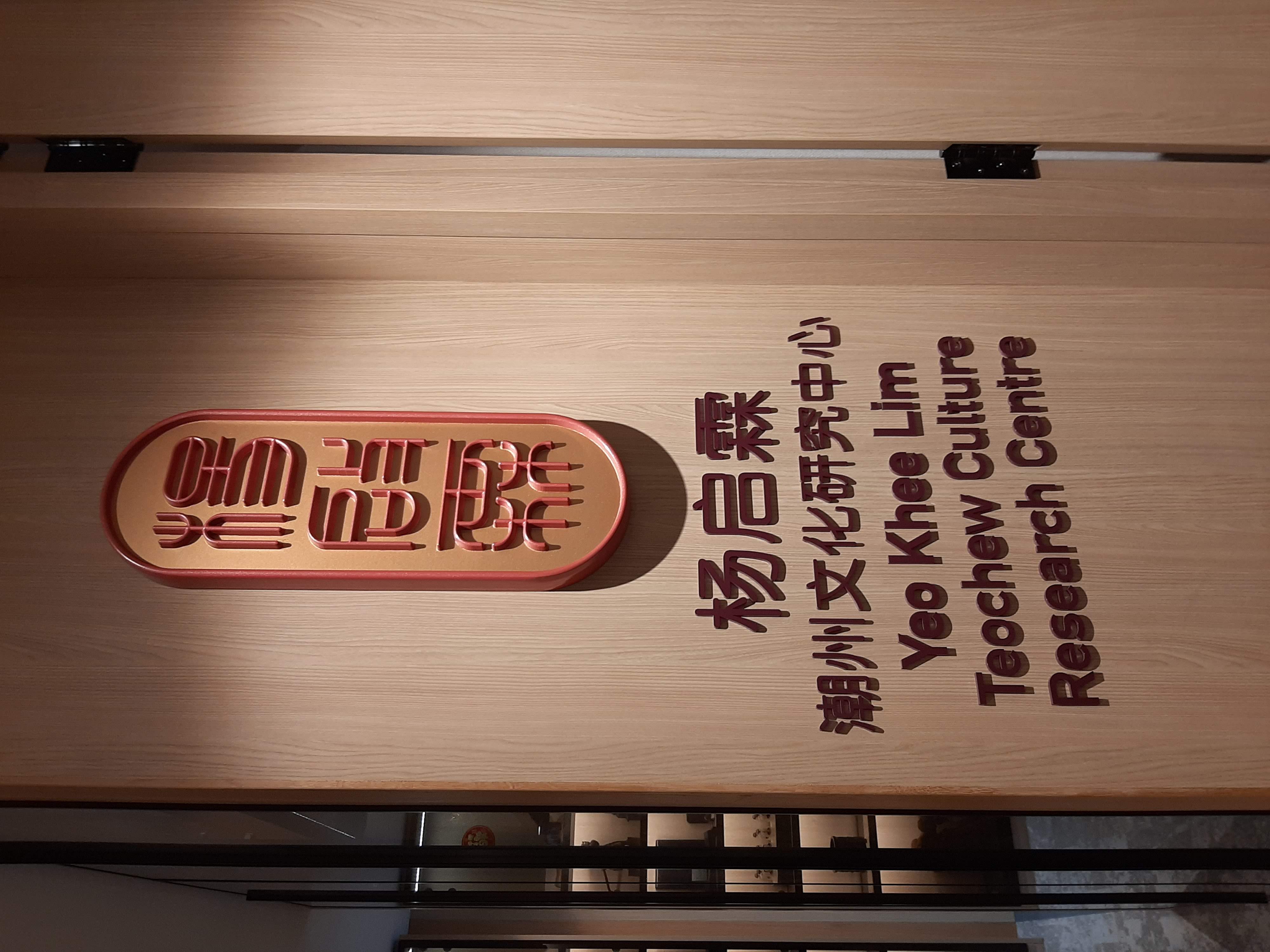
<p><img src="/assets/images/ykltcrc/ykltcrc_sign.jpg" alt="Entrance to Yeo Khee Lim Teochew Culture Research Centre" /></p>

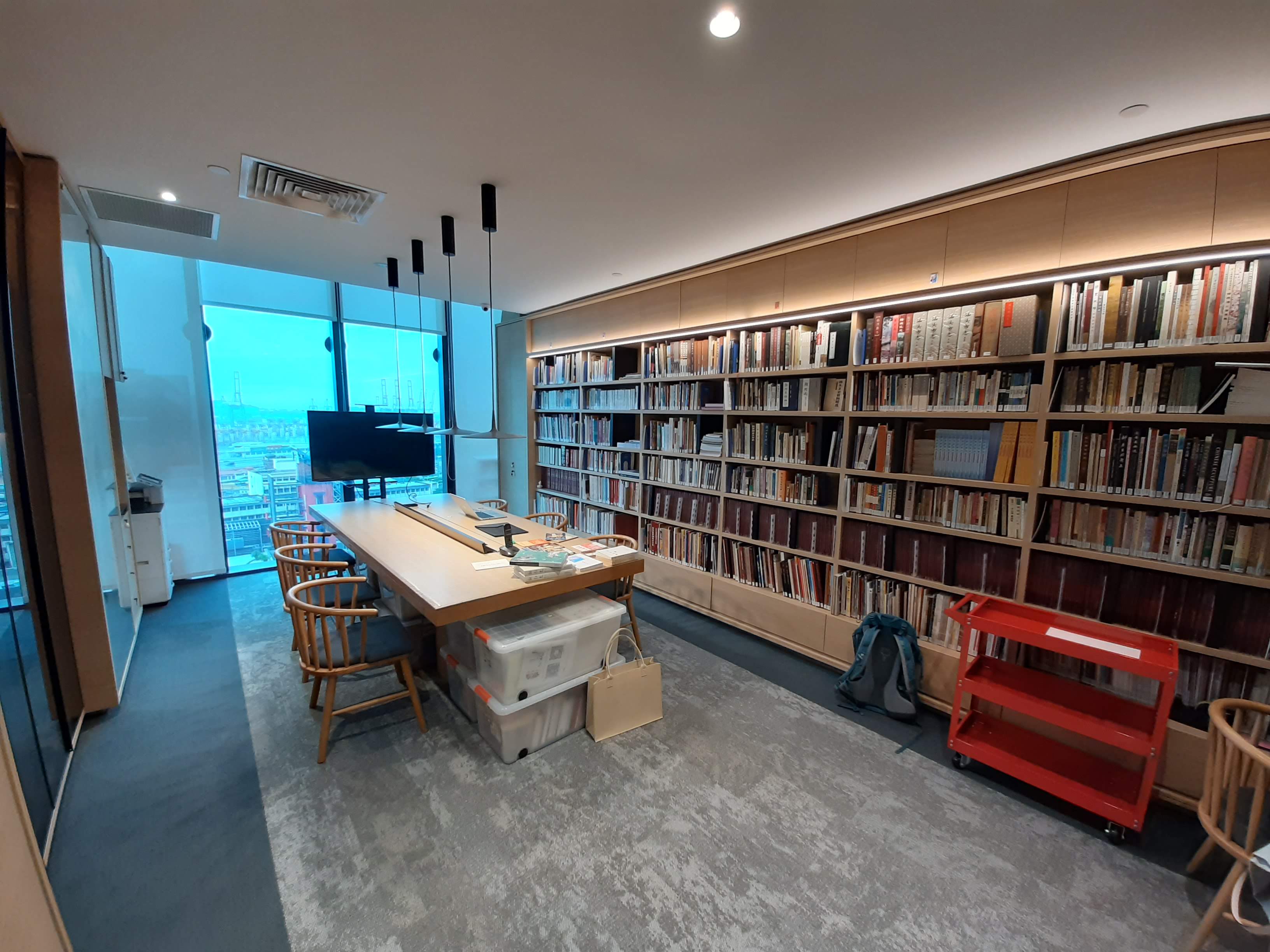
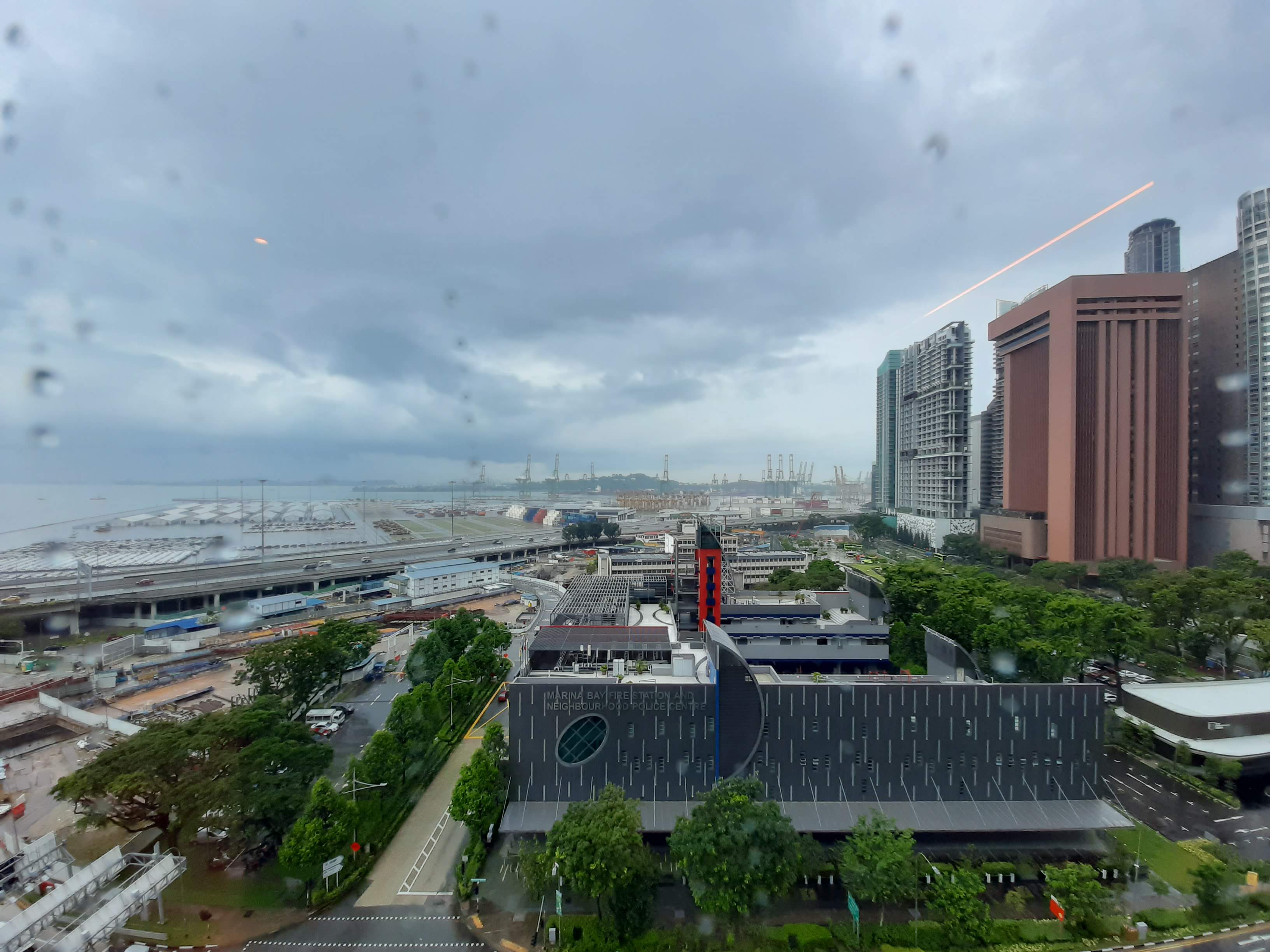
<p>The centre itself occupies a single room, with a great view of the Tanjong
Pagar port terminal to the South. On the day of my visit it was raining but
after the showers cleared I could see the port with the hills of Sentosa in the
background.</p>

<p><img src="/assets/images/ykltcrc/ykltcrc_room.jpg" alt="Premises of Yeo Khee Lim TCRC; large table in the middle, bookshelves on the sides, and a large window at the end of the room." /></p>

<p><img src="/assets/images/ykltcrc/ykltcrc_rainy_window.jpg" alt="View from the window, Tanjong Pagar port terminal with cranes and containers and forested hills in the background." /></p>

<p>Don’t be fooled by the size: there are many treasures packed into this one
room. Some of the collection is <a href="https://yeokheelimtcrc.com/zhongxin-ziliao-ku/">listed on their
website</a>, but there is much
more that is not yet online. Anyone with interest in Teochew culture and
language can easily spend the whole day browsing the shelves.</p>

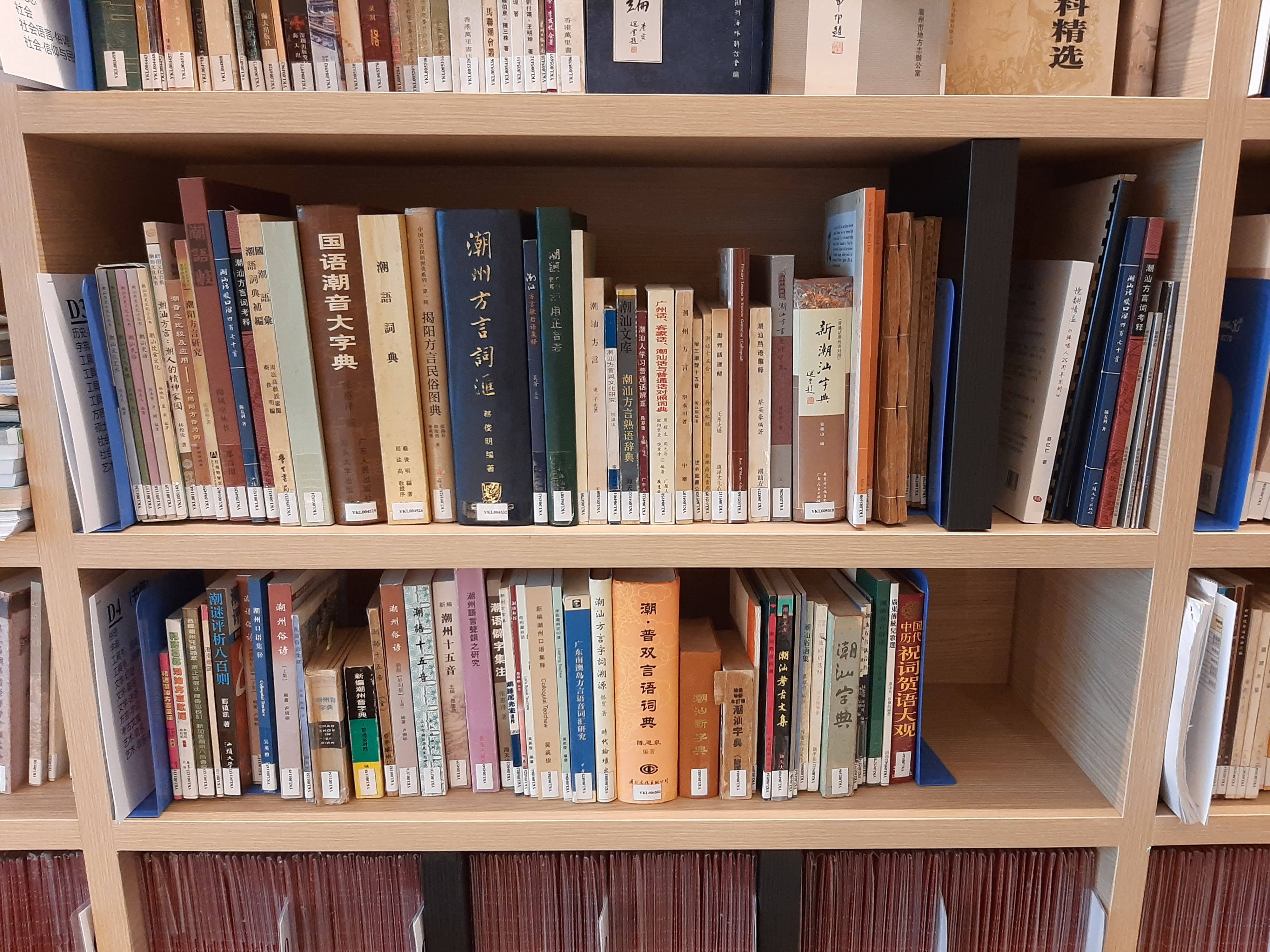
<p>One special focus is the collection of vinyl recordings of Teochew music and
opera. These are being digitized by the Centre and can be listened to on-site.
Many album sleeves, which usually have the lyrics to the songs in the
recordings, have been scanned and can be viewed on their website.</p>

<p><img src="/assets/images/ykltcrc/ykltcrc_bookshelf.jpg" alt="Bookshelf with Teochew books and vinyl records" /></p>

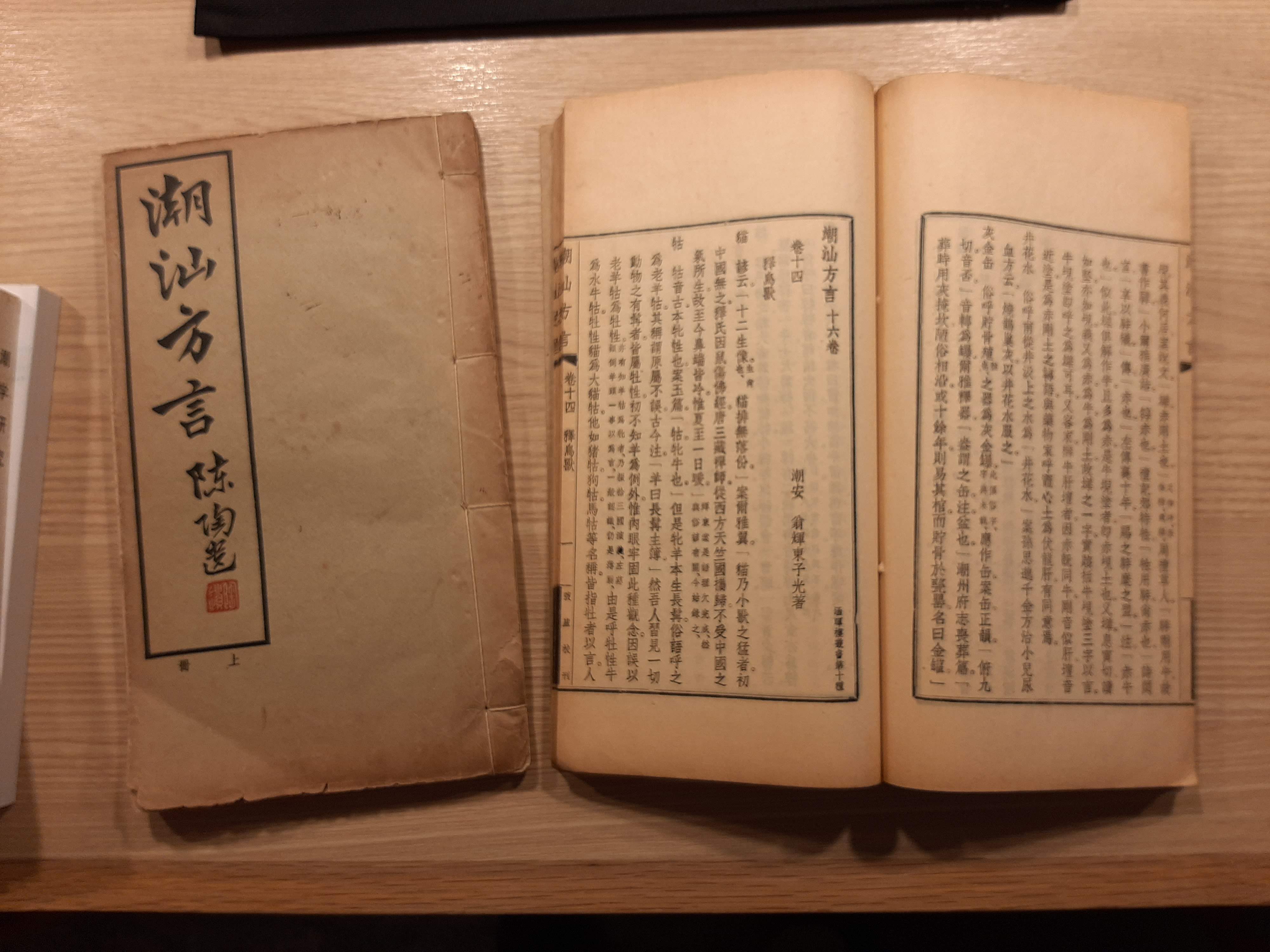
<p><img src="/assets/images/ykltcrc/ykltcrc_dictionary.jpg" alt="Thread-bound Teochew dictionary on table, one volume opened" /></p>

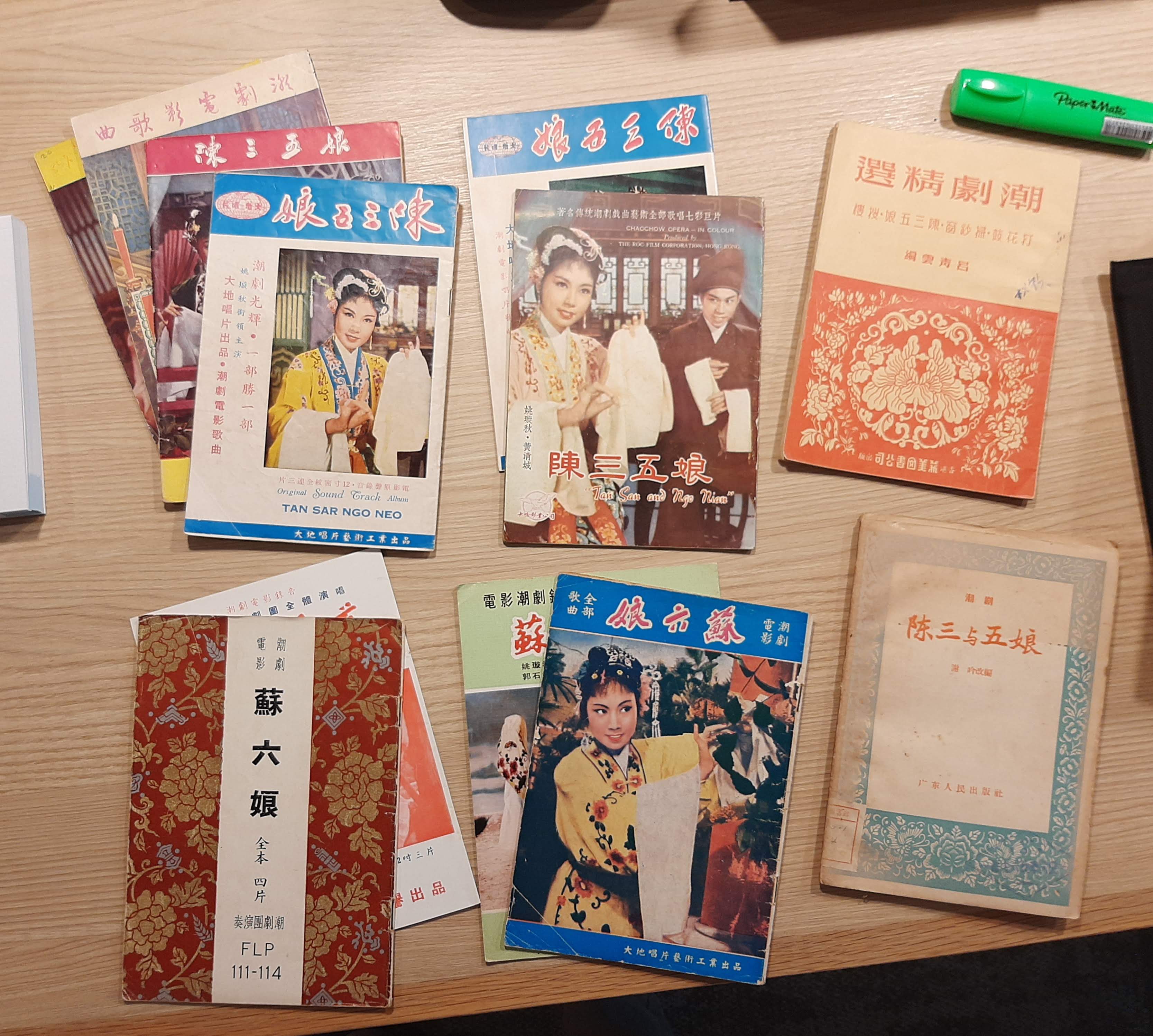
<p>I visited the Centre to look for commemorative booklets of Teochew opera movie
productions from the 1950s and 1960s, to do more research for my <a href="https://learn-teochew.github.io/tc-opera/transcriptions/">Learn Teochew
Opera website</a>. These
movies were produced in Hong Kong and exported to Teochew communities around
the world. Commemorative booklets contained pictures and writeups of the
actors, as well as transcripts of the lyrics and dialogue, and were widely
published and sold to fans. However because they were commercial material, they
were rarely collected by libraries and are not easy to find today.</p>

<p>When I arrived at the Centre, I asked ther intern, Meixin, to help me look for
such booklets. Some time later, the President of Nam Hwa Opera, Mr Toh Lim Mok,
dropped in to say hello. When I mentioned what I was looking for, he opened a
cabinet and started taking out stacks of these booklets: I nearly fell out of
my chair! The picture below shows just a small part of what they have.</p>

<p><img src="/assets/images/ykltcrc/ykltcrc_opera_scripts.jpg" alt="Commemorative booklets with scripts of movie productions of Teochew operas, colorful covers, some with pictures of the opera stars" /></p>

<p>This was a very pleasant and productive visit: I not only found what I was
looking for, but had to stop myself from being sidetracked by all the other
material there.</p>

<p>Many thanks to Mr Toh for the kind welcome, Meixin for her help, and Ms Janet
Chong for making the arrangements for me to visit!</p>

<p>For researchers: <a href="https://yeokheelimtcrc.com/lianluo-women/">Contact the Centre by
email</a> to make an appointment. The
premises are usually not open to the public, so you should contact them in
advance. The Centre is located in the Nam Hwa Opera offices on the 11th floor
of the Singapore Chinese Cultural Centre, 1 Straits Boulevard, Singapore.
Closest MRT stations are: Shenton Way, Downtown, or Marina Bay.</p>]]></content><author><name></name></author><summary type="html"><![CDATA[A few days ago I paid a visit to the Yeo Khee Lim Teochew Culture Research Centre, located in the premises of the Nam Hwa Opera at the Singapore Chinese Cultural Centre in downtown Singapore.]]></summary></entry><entry><title type="html">Updates to Learn Teochew Opera</title><link href="https://learn-teochew.github.io/2023/06/09/tc-opera-updates.html" rel="alternate" type="text/html" title="Updates to Learn Teochew Opera" /><published>2023-06-09T00:00:00+00:00</published><updated>2023-06-09T00:00:00+00:00</updated><id>https://learn-teochew.github.io/2023/06/09/tc-opera-updates</id><content type="html" xml:base="https://learn-teochew.github.io/2023/06/09/tc-opera-updates.html"><![CDATA[<p>We have made some updates to the <a href="https://learn-teochew.github.io/tc-opera/">Learn Teochew
Opera</a> website, to bring more
information on Teochew opera to our readers. Some of these changes were done
over the course of the past year but we summarize them together here.</p>

<ul>
  <li>Added suggestions for further reading</li>
  <li>Complete Pêngim transcription and English translation of 陳三五娘 <em>Dang-san
Ngou-niê</em> <a href="https://learn-teochew.github.io/tc-opera/transcriptions/">now available</a></li>
  <li>Tidied up description of historical Teochew opera scripts, and added <a href="https://learn-teochew.github.io/tc-opera/historical-scripts/">our
explainer</a> on
how to read them.</li>
</ul>

<p>Hope that our readers will find these useful, please leave feedback if you find
errors or have suggestions for improvement!</p>]]></content><author><name></name></author><summary type="html"><![CDATA[We have made some updates to the Learn Teochew Opera website, to bring more information on Teochew opera to our readers. Some of these changes were done over the course of the past year but we summarize them together here.]]></summary></entry><entry><title type="html">Love under the lanterns - Dang-san Ngou-nio</title><link href="https://learn-teochew.github.io/2022/02/15/nguang-siou-dang-san-ngou-nio.html" rel="alternate" type="text/html" title="Love under the lanterns - Dang-san Ngou-nio" /><published>2022-02-15T00:00:00+00:00</published><updated>2022-02-15T00:00:00+00:00</updated><id>https://learn-teochew.github.io/2022/02/15/nguang-siou-dang-san-ngou-nio</id><content type="html" xml:base="https://learn-teochew.github.io/2022/02/15/nguang-siou-dang-san-ngou-nio.html"><![CDATA[<p>Today is Nguang-siao 元宵, the 15th day of the lunar New Year, also known as
the Lantern Festival, when people go out to admire beautiful lantern displays
and solve riddles. Maybe you might find your true love under the lanterns, like
the story of Dang-san and Ngou-nio 陳三五娘, who first encounter each other in
Dio-ziu at the Nguang-siao festival.</p>

<p>There are different operas based on this story, in both Hokkien and Teochew
opera traditions, because it is well known in both regions. After all,
Dang-san’s hometown is near the Hokkien city of Zuan-ziu 泉州.</p>

<p>You can enjoy the music, choreography, and humor of the opera from the comfort
of home, because the 1961 version has been uploaded to YouTube by Teochew opera
fans. If you need some help understanding the Teochew, we have transcribed the
Teochew with both Pêng’im and characters, and also translated it into English
<a href="https://learn-teochew.github.io/tc-opera/transcriptions/">here</a>.</p>

<p>Here is an excerpt from the song that Ngou-nio sings when she first steps out
of the house to see the lanterns:</p>

<p>https://youtu.be/jkxdZsB5iBo?t=180</p>

<p>***</p>

<p>cug guin-mung, hi bug-zing</p>

<p>出閨門 喜不盡</p>

<p>Stepping out of the inner courtyard’s confines is joy beyond compare</p>

<p>***</p>

<p>mag-zoin gêng-muêh ring cêng-sing</p>

<p>目前景物盡清新</p>

<p>The scene before my eyes is so refreshing and new.</p>

<p>***</p>

<p>dêng ru cên, ghuêh ru gian</p>

<p>燈如星、月如鏡</p>

<p>Lanterns like stars, the moon like a mirror.</p>

<p>***</p>

<p>huê-ciu-ngeng-huê bug-mên sian</p>

<p>火樹銀花 不夜 城</p>

<p>The fireworks’ brilliant sparkle make this a city without night.</p>]]></content><author><name></name></author><summary type="html"><![CDATA[Today is Nguang-siao 元宵, the 15th day of the lunar New Year, also known as the Lantern Festival, when people go out to admire beautiful lantern displays and solve riddles. Maybe you might find your true love under the lanterns, like the story of Dang-san and Ngou-nio 陳三五娘, who first encounter each other in Dio-ziu at the Nguang-siao festival.]]></summary></entry><entry><title type="html">How to read historical opera scripts (4)</title><link href="https://learn-teochew.github.io/2022/01/27/how-to-read-historical-opera-scripts-4.html" rel="alternate" type="text/html" title="How to read historical opera scripts (4)" /><published>2022-01-27T00:00:00+00:00</published><updated>2022-01-27T00:00:00+00:00</updated><id>https://learn-teochew.github.io/2022/01/27/how-to-read-historical-opera-scripts-4</id><content type="html" xml:base="https://learn-teochew.github.io/2022/01/27/how-to-read-historical-opera-scripts-4.html"><![CDATA[<p>Teochew is actually one of the earliest examples of a Chinese regional
vernacular language in written form, in these opera scripts. This means that
they have some unusual characters or words that are not understandable to those
who know only Mandarin or Literary Chinese.</p>

<p>This tradition of written Teochew was unfortunately never formalized or used in
formal education. These old play scripts, although so valuable to us today,
were regarded by literati of the past as low-class and not worth preserving. As
a result, all of the existing Teochew texts from the Ming era were either
rediscovered in libraries outside of China (in Europe and Japan) or recovered
from archaeological excavations.</p>

<p><img src="/assets/images/historical_opera_script_4.png" alt="" /></p>

<p>(Photo: © Bodleian Libraries, University of Oxford, reused under CC-BY-NC 4.0 license)</p>

<p>This page shows some examples of written Teochew/Minnan expressions. Today’s
Teochew writers may use different characters to write the same words, sometimes
because more research has been done on the so-called “original characters”
(本字) of these words, but also because most people today are not familiar with
the old conventions. Teochew character writing is also not standardized,
although there are informal conventions that are more widely understood than
others.</p>

<ul>
  <li>冥昏 mên-hng “evening” (more commonly written today as 暝昏、夜昏)</li>
  <li>值 di “which/where” (question particle, written today as 底、哋)</li>
  <li>今旦 gim-dang “today” (not commonly used in modern Teochew)</li>
</ul>

<p>Variant and vernacular simplified characters are also common. Some readers may
be surprised to see simplified characters in a centuries-old text, because
simplified characters were only introduced as a common standard in the 20th
century. Modern simplified characters however were often based on simplified
forms used in handwriting, calligraphy, and vernacular texts like these, so
some of them have a long history.</p>

<p>Another possible reason for why simplified characters were common is that they
require fewer strokes and are easier to carve into wood. Notice how the
simplified character 𭑧 is used instead of 娘 in the half-width text column,
where the smaller size would make it more difficult to carve the full-form
character.</p>

<p>Education of the literati put a lot of emphasis on correct character forms in
calligraphy, but these play scripts circulated among a lower social stratum and
were therefore not subject to the same cultural restrictions.</p>

<hr />

<p>If you are interested in discovering more historical Teochew opera texts to see
how much you can now understand, do check out our new companion website <a href="https://learn-teochew.github.io/tc-opera/">Learn
Teochew with Teochew Opera</a>, where
we link to useful resources on Teochew opera including digitized versions of
historical editions.</p>]]></content><author><name></name></author><summary type="html"><![CDATA[Teochew is actually one of the earliest examples of a Chinese regional vernacular language in written form, in these opera scripts. This means that they have some unusual characters or words that are not understandable to those who know only Mandarin or Literary Chinese.]]></summary></entry><entry><title type="html">How to read historical opera scripts (3)</title><link href="https://learn-teochew.github.io/2022/01/20/how-to-read-historical-opera-scripts-3.html" rel="alternate" type="text/html" title="How to read historical opera scripts (3)" /><published>2022-01-20T00:00:00+00:00</published><updated>2022-01-20T00:00:00+00:00</updated><id>https://learn-teochew.github.io/2022/01/20/how-to-read-historical-opera-scripts-3</id><content type="html" xml:base="https://learn-teochew.github.io/2022/01/20/how-to-read-historical-opera-scripts-3.html"><![CDATA[<p>Traditional Chinese printed books were mostly woodcut prints, meaning that each
double-page of text and illustrations were carved onto a piece of wood. Wood
and carving were expensive so these books were very economical with space.</p>

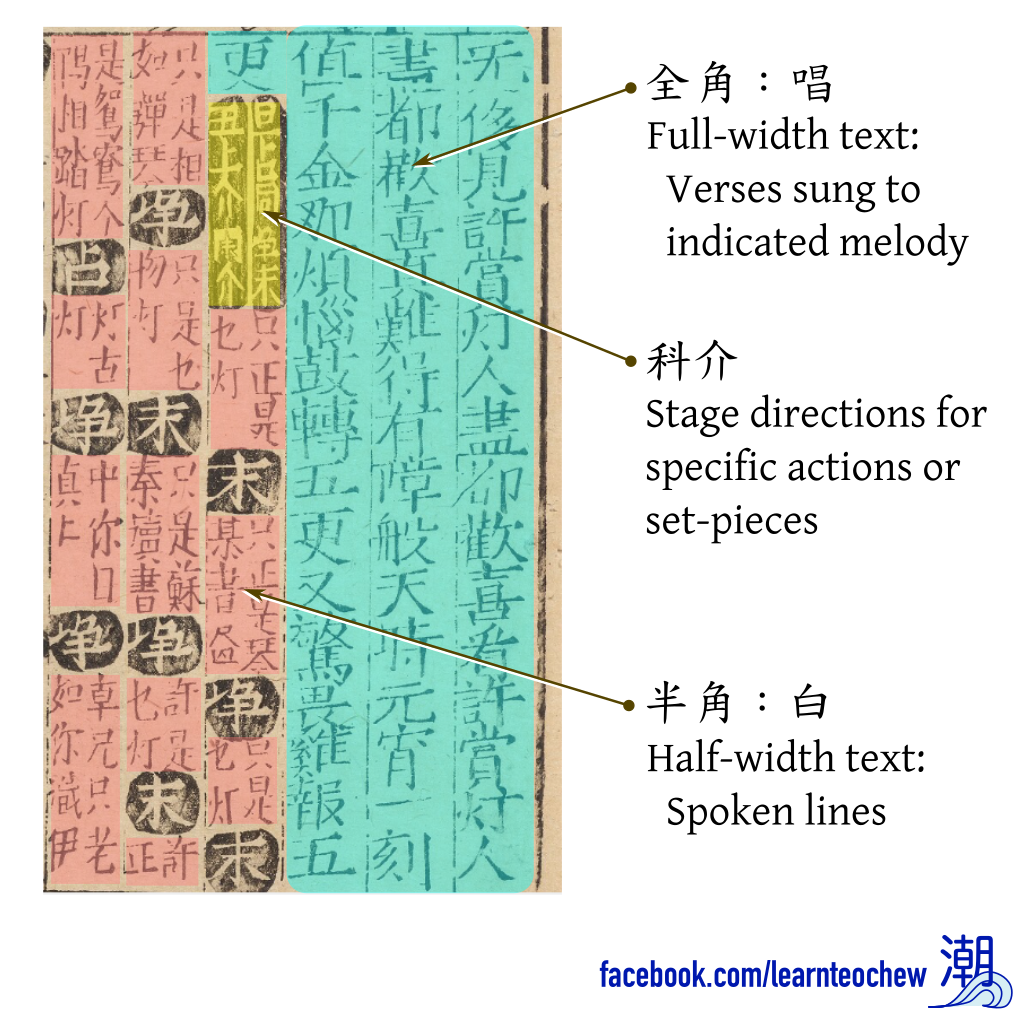
<p>Is that why they squeeze two lines where a single column should be? Actually
this was used to differentiate between lines that were sung to a given melody
(full-width) vs. lines that were spoken (half-width).</p>

<p><img src="/assets/images/historical_opera_script_3.png" alt="" /></p>

<p>(Photo: © Bodleian Libraries, University of Oxford, reused under CC-BY-NC 4.0 license)</p>

<p>Along with the names of roles were also stage directions, like entering (上) or
leaving (下) the stage. Other types of actions were indicated with the
character 介.</p>]]></content><author><name></name></author><summary type="html"><![CDATA[Traditional Chinese printed books were mostly woodcut prints, meaning that each double-page of text and illustrations were carved onto a piece of wood. Wood and carving were expensive so these books were very economical with space.]]></summary></entry><entry><title type="html">How to read historical opera scripts (2)</title><link href="https://learn-teochew.github.io/2022/01/13/how-to-read-historical-opera-scripts-2.html" rel="alternate" type="text/html" title="How to read historical opera scripts (2)" /><published>2022-01-13T00:00:00+00:00</published><updated>2022-01-13T00:00:00+00:00</updated><id>https://learn-teochew.github.io/2022/01/13/how-to-read-historical-opera-scripts-2</id><content type="html" xml:base="https://learn-teochew.github.io/2022/01/13/how-to-read-historical-opera-scripts-2.html"><![CDATA[<p>If you read a modern playscript or screenplay, each scene is usually marked out
with a new heading, the different roles are listed at the beginning, the
character that speaks each line is indicated, and there are stage directions
for actors to enter/exit the stage and to perform certain actions.</p>

<p>These historical Teochew opera scripts also have such stage directions, but
some conventions are different from modern ones.</p>

<p>The most obvious difference is that characters’ names are not used in the text
to mark who is speaking. Instead the names of the roles are used. To use a
Western example, this would be as if the different arias and lines were simply
marked as “tenor” or “soprano”, without specifying which tenor or which soprano
character is singing.</p>

<p>Teochew opera scripts were not intended to be read like modern literature. The
audience and of course the performers would already be familiar with the story,
and the number of characters was also not large. The main roles usually had
only one character each.</p>

<p><img src="/assets/images/historical_opera_script_2.png" alt="" /></p>

<p>(Photo: © Bodleian Libraries, University of Oxford, reused under CC-BY-NC 4.0 license)</p>

<p>In historical scripts like Li-gian-gi there were seven roles:</p>

<ul>
  <li>生 sêng - Male lead</li>
  <li>旦 duan - Female lead</li>
  <li>淨 zêng - Painted face</li>
  <li>丑 tiu - Clown</li>
  <li>外 ghua - Old man</li>
  <li>末 bhuah - Old woman</li>
  <li>貼 tiêb - Second female lead</li>
</ul>

<p>In modern scripts this has been simplified to four main roles: 生、旦、淨、丑,
but each can be subdivided further (e.g. 小生、老生……).</p>

<p>Opera scripts also indicate the names of melodies for the lines that were sung.
The same melodies were used between different operas, just with different
words. Many of the melodies in the Li-gian-gi are still preserved today in the
Lam-gueng 南管 musical tradition.</p>

<hr />

<p>Further reading:</p>

<ul>
  <li><a href="https://zh.wikipedia.org/wiki/潮剧">潮劇 (Wikipedia)</a></li>
</ul>]]></content><author><name></name></author><summary type="html"><![CDATA[If you read a modern playscript or screenplay, each scene is usually marked out with a new heading, the different roles are listed at the beginning, the character that speaks each line is indicated, and there are stage directions for actors to enter/exit the stage and to perform certain actions.]]></summary></entry><entry><title type="html">How to read historical opera scripts (1)</title><link href="https://learn-teochew.github.io/2022/01/06/how-to-read-historical-opera-scripts-1.html" rel="alternate" type="text/html" title="How to read historical opera scripts (1)" /><published>2022-01-06T00:00:00+00:00</published><updated>2022-01-06T00:00:00+00:00</updated><id>https://learn-teochew.github.io/2022/01/06/how-to-read-historical-opera-scripts-1</id><content type="html" xml:base="https://learn-teochew.github.io/2022/01/06/how-to-read-historical-opera-scripts-1.html"><![CDATA[<p>In a <a href="/2021/06/29/teochew-literature-1-lychee-mirror.html">previous post</a>
we introduced one of the earliest known historical Teochew/Minnan opera
scripts, the <em>Li-gian-gi</em> 《荔鏡記》“Tale of the Lychee Mirror”, which was
published in the 16th century during the Ming era. Modern adaptations of the
opera, under the name <em>Dang-san Ngou-niê</em> 陳三五娘 are still popular today,
however the scripts have been almost completely rewritten.</p>

<p>If you want to read the original versions, the best way to start would probably
be to use a modern edition or transcription, e.g. those published by Wu
Shou-li, because these clarify parts of the text that are difficult to read,
use standard characters, and have puncutation.</p>

<p>However, if you want to see what the original books from several hundred years
ago look like, you can find many of them online. The Bodleian Library has a
<a href="https://digital.bodleian.ox.ac.uk/objects/cb79b399-7272-4061-81e3-617828b50493/surfaces/7187501c-fe18-401f-8e8e-316cbc75d0fa/">high-resolution digital
scan</a>
of the Li-gian-gi freely available. However some help may be necessary to
understand how to read these historical editions.</p>

<p>In this series, we’ll be introducing some of the conventions and features of
these texts that are likely to be unfamiliar to modern readers. We hope that
this will make them less mystifying for you, and that you will enjoy the
process of discovering them as real books, and not just pretty artefacts to
admire.</p>

<hr />

<p>First of all: Did you know that the Li-gian-gi is actually two books in one?</p>

<p>It was common practice for publishers to include different books in the same
printed volume. Maybe this was because it was more economical: perhaps if each
book was too short, it was more expensive to carve separate woodblocks? Or
maybe it was to entice readers to buy a new book by bundling it with another
one that was known to be popular.</p>

<p><img src="/assets/images/historical_opera_script_1.png" alt="Image of Lychee Mirror historical edition with upper and lower registers marked" /></p>

<p>(Photo: © Bodleian Libraries, University of Oxford, reused under CC-BY-NC 4.0 license)</p>

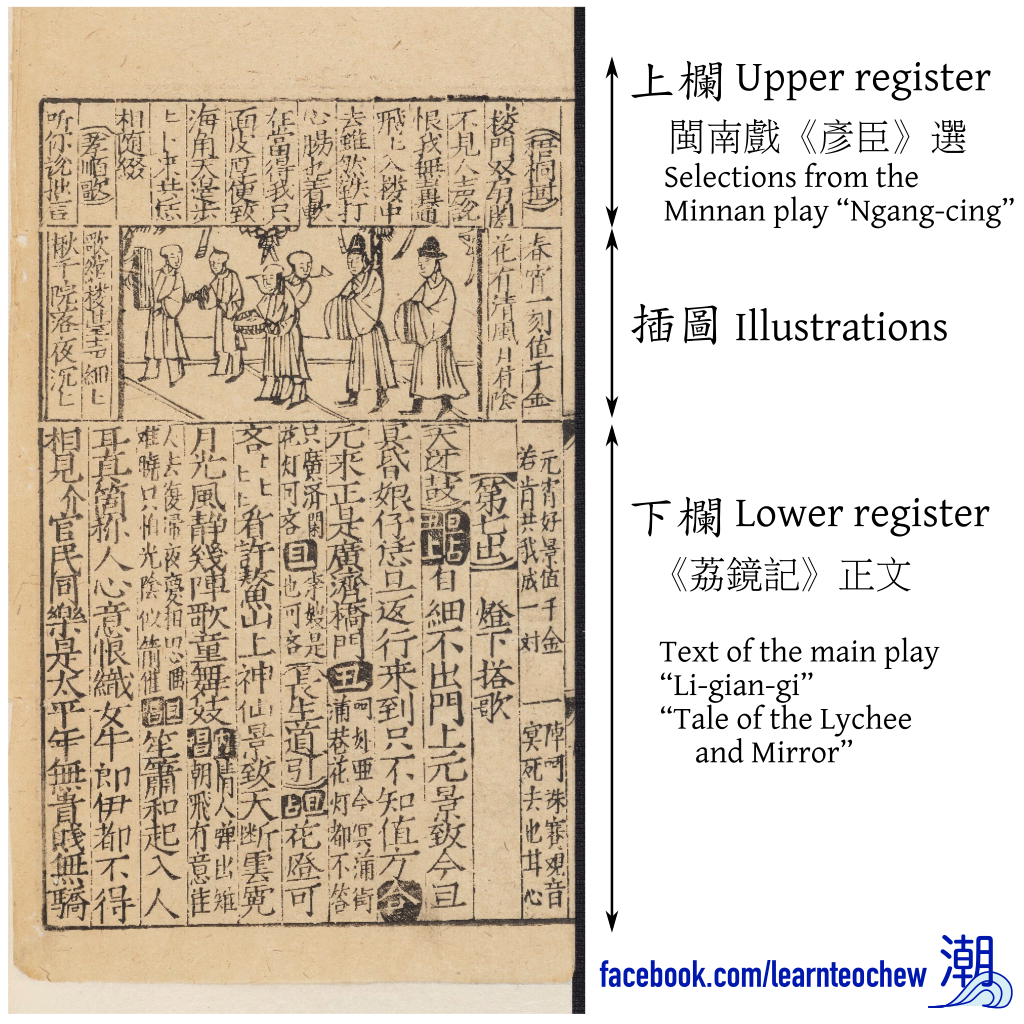
<p>Unlike what you might expect, these two books were not back-to-back, but
printed in parallel on the same pages. The upper part (“register”) of each page
consists of selections from a Minnan opera known as 顏臣, while the text of the
Li-gian-gi is in the lower register. Between the two are illustrations
depicting scenes in the Li-gian-gi. To save money, publishers were also known
to re-use woodblock illustrations from different books, just changing the
captions.</p>

<hr />

<p>Further reading:</p>

<ul>
  <li>The Taiwanese scholar <a href="https://zh.wikipedia.org/wiki/吳守禮">Wu Shou-li 吳守禮</a>
(1909-2005) has written and published scholarly editions of many of the most
important historical Minnan/Teochew historical opera scripts, including
荔鏡記、荔枝記、蘇六娘、and 金花女.</li>
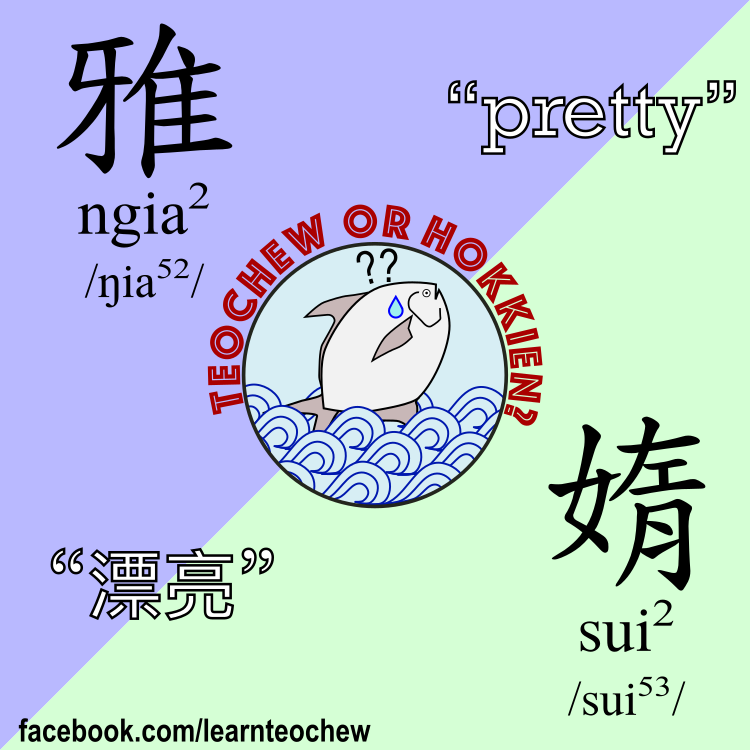
</ul>]]></content><author><name></name></author><summary type="html"><![CDATA[In a previous post we introduced one of the earliest known historical Teochew/Minnan opera scripts, the Li-gian-gi 《荔鏡記》“Tale of the Lychee Mirror”, which was published in the 16th century during the Ming era. Modern adaptations of the opera, under the name Dang-san Ngou-niê 陳三五娘 are still popular today, however the scripts have been almost completely rewritten.]]></summary></entry><entry><title type="html">Teochew or Hokkien??? (7)</title><link href="https://learn-teochew.github.io/2021/11/18/teochew-or-hokkien-7.html" rel="alternate" type="text/html" title="Teochew or Hokkien??? (7)" /><published>2021-11-18T00:00:00+00:00</published><updated>2021-11-18T00:00:00+00:00</updated><id>https://learn-teochew.github.io/2021/11/18/teochew-or-hokkien-7</id><content type="html" xml:base="https://learn-teochew.github.io/2021/11/18/teochew-or-hokkien-7.html"><![CDATA[<p>“What a pretty fish!” A-Cion-He is flattered, but wants to know whether this was said in Teochew or Hokkien….</p>

<p>This is the final post of this series, thank you for joining us on this trip through some common differences between Hokkien and Teochew!</p>

<p><img src="/assets/images/teochew-or-hokkien/hokkien_teochew_7.png" alt="" /></p>

<p>A. 只尾 魚 真 雅 zi-bhuê he zing ngia</p>

<p><em>or</em></p>

<p>B. 只尾 魚 真 媠 zi-bhuê he zing sui</p>

<p>[ANSWER BELOW]</p>

<p>.</p>

<p>.</p>

<p>.</p>

<p>.</p>

<ul>
  <li>Teochew: 雅 ngia2 /ŋia⁵²/</li>
  <li>Hokkien: 媠 súi /sui⁵³/</li>
</ul>]]></content><author><name></name></author><summary type="html"><![CDATA[“What a pretty fish!” A-Cion-He is flattered, but wants to know whether this was said in Teochew or Hokkien….]]></summary></entry></feed>